
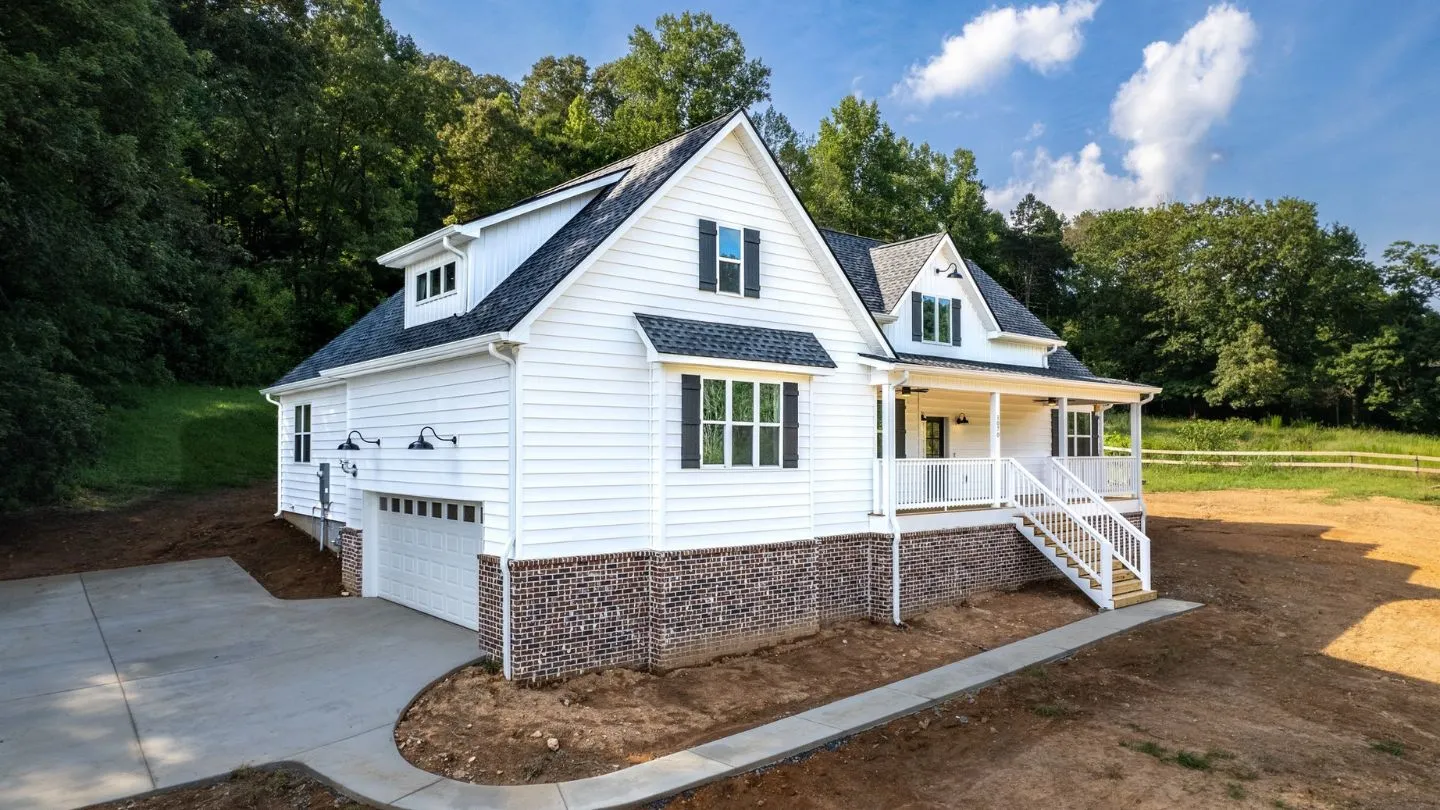
Building a custom home is one of the most rewarding investments you can make, a chance to design a space that truly reflects your lifestyle, values, and aspirations. Unlike pre-built properties, custom homes allow you to control every detail, from layout and materials to functionality and aesthetics. However, turning your dream into a tangible reality requires the expertise and precision of professional builders who understand how to translate vision into structure. That’s where custom home builders play a pivotal role, guiding homeowners through each phase of design, planning, and construction to ensure a home that’s not only beautiful but built to last.
Key Takeaways
- Define your vision clearly with a custom home builder to create a space that reflects your lifestyle and personal aspirations.
- Choose a highly-rated builder by researching and evaluating their experience to turn your dream home vision into reality with quality craftsmanship.
- Embrace the collaborative design process, incorporating your style and functional needs for a tailored home that enhances your living experience.
Defining Your Vision
The first step in crafting your dream home is defining your vision. Custom home builders assist homeowners in this crucial phase, ensuring a tailored approach to every aspect of their new home. Through collaborative discussions, these builders capture ideas that reflect your personal style and lifestyle needs, ultimately creating a space that embodies your identity and lifestyle requirements.
The result is a home that not only meets your practical needs but also holds a deep emotional journey, representing your personal aspirations and careful decisions.
Identifying Priorities and Preferences
The initial consultation with a custom home builder is essential for discussing your goals, preferences, budget, location, and timeline. This is where a clear understanding of your vision begins. Consider your personal taste, lifestyle, and how you envision your daily routine in the new space.
Effective space planning involves considering the flow of spaces, interactions of rooms, and daily routines to ensure the home is both functional and comfortable. Custom homes offer financial advantages by allowing for better budget management and allocation according to your priorities. Additionally, custom builders can design flexible living spaces to adapt to changing needs over time.
Read more: 15 Essential Questions to Ask a Builder When Building a Home
Creating a Vision Board
Creating a vision board is a powerful tool in the custom home-building process. It serves as a visual representation of your ideas and preferences, helping you crystallize your vision and communicate it effectively to your builder. Vision boards can include elements such as:
- Color schemes
- Materials
- Design aesthetics
- Functional requirements that align with your dreams.
Custom home builders play a crucial role in guiding you through this process, ensuring that your unique vision is translated into a cohesive design plan. Flexibility is key, as vision boards can help ensure the final design accommodates future lifestyle changes.
Selecting the Right Builder
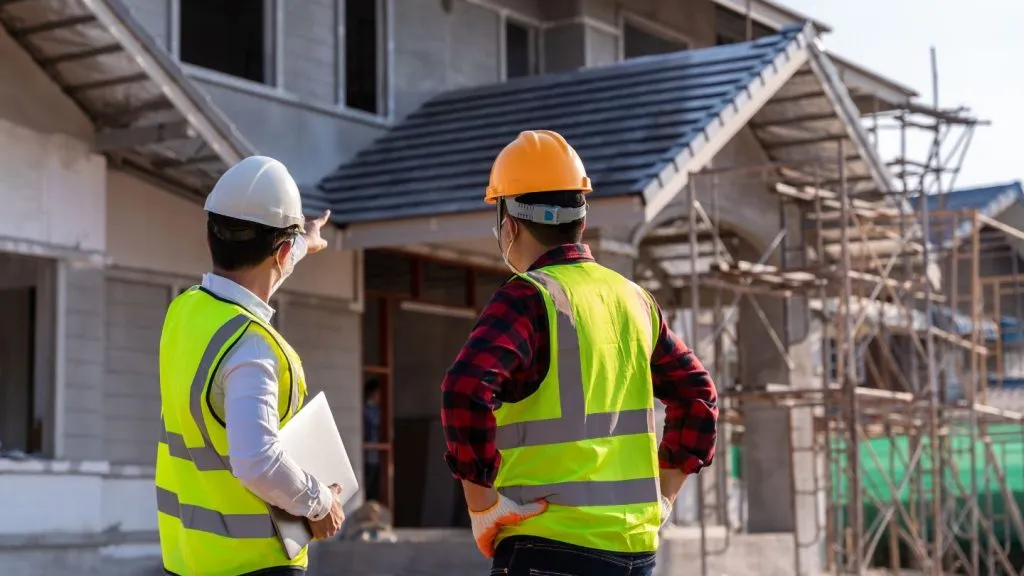
Choosing the right custom home builder is crucial for turning your vision into reality. The right builder will reflect your personal dreams and practicalities in your new home, ensuring it is built to your specifications and unique needs. Conducting thorough research and vetting builders can help you feel confident about your choice.
Custom home building is a more time-consuming process compared to buying pre-built homes, but it allows for a perfect fit to your life, with superior and more durable material selections.
Researching Local Builders
Effective ways to research local custom builders include asking for referrals, checking online reviews, and examining their portfolio. Online reviews, testimonials, and personal referrals are valuable resources when selecting a custom home builder. It’s important to verify a builder’s credentials, including licenses, insurance, and affiliations with professional bodies.
Engaging in detailed discussions with your builder is essential. These conversations should emphasize your lifestyle, aesthetic preferences, and practical requirements to customize the home to your unique needs. Client engagement is essential for custom home builders to adapt the design according to your unique needs and preferences.
Evaluating Experience and Expertise
Evaluating a builder’s experience and expertise is crucial to ensure they can handle the complexities of your custom home project. Key points to consider include:
- Inspecting a builder’s past projects to gain valuable insights into their craftsmanship and ability to deliver on client expectations.
- Using previous work as a testament to their capability in managing the custom home project.
- Ensuring the project meets design and functional requirements.
This evaluation helps you choose experienced professionals who can bring your vision to life with quality craftsmanship. Choosing the right builder can define the success of your project. Exploring top tips on how to choose a home builder according to the experts helps homeowners identify trustworthy professionals with proven craftsmanship, transparent communication, and a commitment to quality that ensures a seamless custom home experience.
Collaborative Design Process
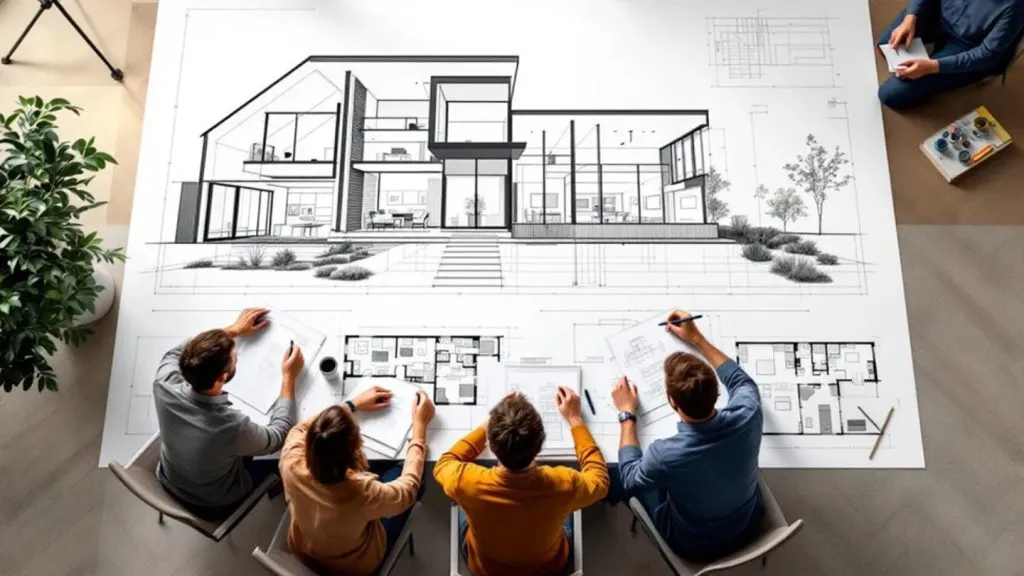
The design phase is a collaborative process that emphasizes creating a space that reflects your personality, needs, and lifestyle. Custom builders play a crucial role by ensuring careful planning, collaboration, and expertise throughout this phase. Working closely together leads to a home that embodies your style and fosters a sense of pride and accomplishment.
Custom home building is akin to creating a bespoke suit; the end result is a unique home tailored specifically to your vision through a personalized approach to building a custom home.
Working with a Design Team
The main purpose of working with a design team in the building process is to ensure your aesthetic and functional needs are met. An effective design process depends on collaboration. It is essential to work with a builder who utilizes an integrated design team. During the design phase, several factors are taken into account, including:
- Space optimization
- Light
- Flow
- Function
Custom builders focus on functionality to enhance your daily routines. They also consider the flow of your space to ensure it meets your needs.
Incorporating universal design principles ensures that the home is accessible for everyone. Critical aspects like natural light, window placement, color schemes, and textures create an emotional backdrop and cohesion within the design. Material selection in home finishes affects aesthetics, functionality, and durability.
Details like landscaping, lighting, and personal touches contribute to making a house uniquely yours; each unique feature detail reflects this. Understanding how experts tailor spaces to your needs is key to designing your dream home. By learning how custom home builders can help you design the perfect floor plan, you can align functionality and aesthetics to create a layout that enhances comfort, efficiency, and everyday living.
Material Selection and Sustainability
High-quality materials are essential in home building as they ensure durability and enhance the aesthetic appeal of the home. Incorporating energy efficiency from the initial design phase enhances performance. It also results in reduced running costs. Custom builders utilize high-quality, sustainable materials like double or triple-pane windows, higher-quality materials and insulation, and premium materials to improve energy efficiency.
Integrating energy-efficient systems such as HVAC, lighting, and water heating can significantly reduce a home’s energy consumption. Consideration of renewable energy sources contributes to a sustainable and environmentally responsible home design. Advanced framing techniques and creating tight thermal envelopes are essential for maximizing a home’s energy efficiency, including various energy-efficient features.
Construction Phase
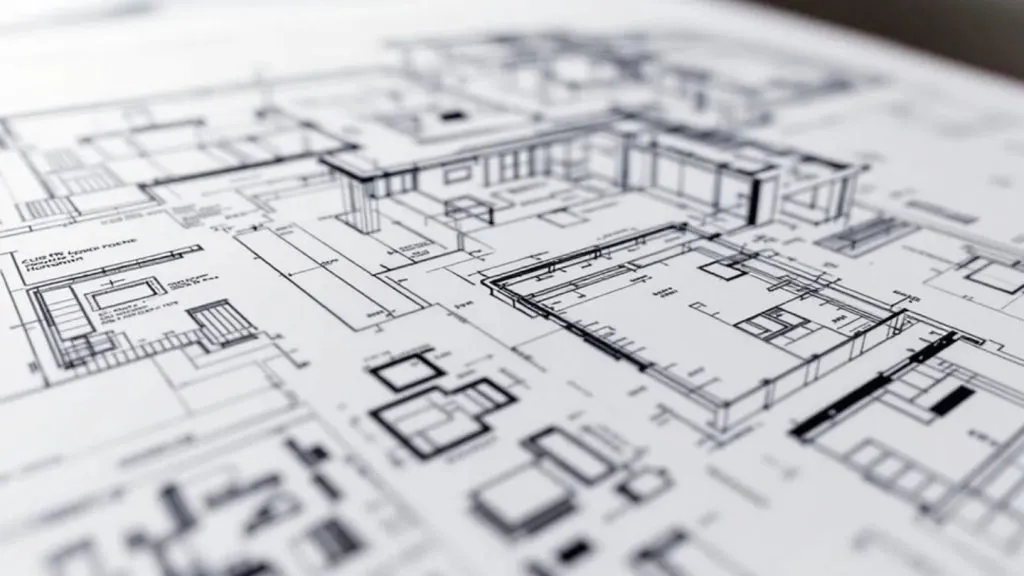
The construction phase of a custom home begins with architects and designers creating precise blueprints to translate the homeowner’s ideas. Successful custom home construction requires careful coordination between multiple trades and suppliers to ensure everything runs smoothly.
Every custom home construction project is unique, making each home a personalized reflection of its owner’s vision. The construction phase involves attention to detail and efficient management, beginning with site preparation, followed by framing and securing the home.
Site Preparation and Foundation
Proper site preparation is the first step in the construction process of a custom home. The process involves clearing the land and establishing drainage. Additionally, it is important to ensure a solid foundation. Proper site preparation prevents structural issues and ensures smooth construction.
This foundational work sets the stage for a structurally sound home that will stand the test of time.
Building the Structure
The building structure phase includes the erection of walls, installation of roofing, and integration of windows and doors. When framing is completed, the home starts to take shape, and rooms become real.
Adhering to local building codes and ensuring each step is meticulously executed by skilled tradespeople is crucial for a successful custom home construction.
Interior and Exterior Finishing
Interior finishing includes elements such as:
- Wallpaper
- Paint
- Electrical fittings
- Cabinetry
Each element in the interior finishing contributes significantly to the overall aesthetics and functionality of the home. Attention to detail ensures that the custom home is not only beautiful but also functional, highlighting precision in construction.
The exterior finishing, including landscaping and outdoor spaces, further enhances the home’s curb appeal and usability, making it aesthetically pleasing.
Quality Control and Inspections
Inspections are important in custom home building to guarantee that the home meets high standards and is built to last. Regular inspections are conducted during the construction process. These inspections help ensure that the work adheres to high standards and complies with local building codes.
Custom builders conduct thorough inspections at various stages to maintain quality craftsmanship and address any issues promptly, ensuring that each project meets the standards of a custom builder.
Read more: What to Expect During the Home Inspection Phase
Regular Site Inspections
Regular inspections help ensure:
- Adherence to local building codes and regulations, safeguarding the project’s compliance.
- Tracking progress throughout the construction phase.
- Prompt addressing of any issues to maintain high-quality standards.
Consistent site inspections facilitate the smooth progression of the construction project and enhance the overall quality of the finished home.
Final Walkthrough
The final walkthrough is an essential step to ensure everything is perfect before moving in. During the walkthrough, homeowners can identify any last-minute adjustments needed to fulfill their expectations. Collaborating closely with the builder during the final walkthrough helps address any concerns and ensures client satisfaction.
Completing the final walkthrough with confidence allows homeowners to move in with peace of mind.
Moving In and Settling Down
The moving-in process culminates with the completion of final inspections, after which the keys to your dream home are handed over during the final walkthrough. A special reveal event celebrates the completion of a custom home, allowing homeowners to fully experience their new living space in what can be a complex process.
Once moved in, you’ll experience adjustments as you discover how your custom home performs in different weather conditions throughout the seasons. Open communication and responsiveness from the builder remain essential for your peace of mind during the transition into your new home.
Preparing for Move-In Day
Preparing for move-in day involves adding personal touches that make a house feel like home. Artwork, furniture placement, and decorative details can transform your new space into a warm and inviting living environment with paint colors.
Ensuring that all final touches are in place and all the details are ready for your exciting journey will make the transition smooth and enjoyable.
Post-Move-In Support
Post-move-in support includes long-term assistance to maintain the home and a commitment to building a valued relationship with homeowners. The builder provides comprehensive warranty information covering various home components, emphasizing the importance of keeping proper records.
Homeowners have access to a team for ongoing questions and support, ensuring they have the resources needed for maintaining their new home.
Long-Term Maintenance and Care
Regular maintenance is crucial to preserving your home’s value and ensuring it remains a comfortable living space. Adhering to a maintenance schedule retains the home’s value and functionality, allowing it to age gracefully.
This meticulous attention to maintenance contributes significantly to the overall living experience and long-term financial benefits of owning a custom home.
Scheduled Maintenance Tasks
Understanding the maintenance requirements of materials is crucial to making informed decisions that fit your lifestyle. Routine maintenance involves checks and repairs of structural elements, systems, and finishes to keep the home functional.
A maintenance schedule helps to prevent small issues from escalating into larger problems. This ensures that your home remains well-maintained. Proactive maintenance enhances the living experience and contributes to a safe and enjoyable home environment.
Enhancing Longevity
Regular long-term maintenance is essential to preserve your custom home’s value and comfort, ensuring it remains a pleasant living space. Implementing a schedule for tasks such as roof inspections, gutter cleaning, and HVAC servicing helps prevent major repairs and prolongs the life of the home.
Post-move-in support from the builder, including warranty information and maintenance guidance, is crucial for keeping the home in top condition.
Final Thoughts
Building a custom home is a rewarding process that transforms ideas into a living reality. From defining your vision and selecting the right custom home builders in Cleveland, TN, to navigating the design and construction phases, each step shapes a space that mirrors your lifestyle, preferences, and long-term goals. With careful planning and collaboration, homeowners can achieve a result that combines beauty, function, and durability for years to come.
Concord Homes, a trusted home builder in Ooltewah, TN, delivers personalized service and expert craftsmanship that reflect your vision with precision and care. Our home builders in Athens, TN, Bradley County, TN, and Ocoee, TN are dedicated to creating homes that stand the test of time—beautifully built, thoughtfully designed, and tailored to your unique way of living. Start your journey today and bring your dream home to life with confidence.
Frequently Asked Questions
What is the main advantage of building a custom home?
The biggest advantage is complete personalization. A custom home allows you to design every detail, layout, material, finish, and feature to match your lifestyle, aesthetic preferences, and functional needs.
Can I make changes during the construction process?
Yes, many builders allow certain modifications during construction. However, changes made after plans are finalized may affect cost and schedule, so clear communication with your builder is essential.
What factors influence the cost of a custom home?
The total cost depends on materials, design complexity, square footage, land conditions, and chosen upgrades. Transparent budgeting with your builder helps align your investment with your expectations.
Do custom homes offer better long-term value?
Absolutely. Custom homes are built with higher-quality materials and tailored functionality, often resulting in increased durability, energy efficiency, and resale value compared to pre-built homes.