
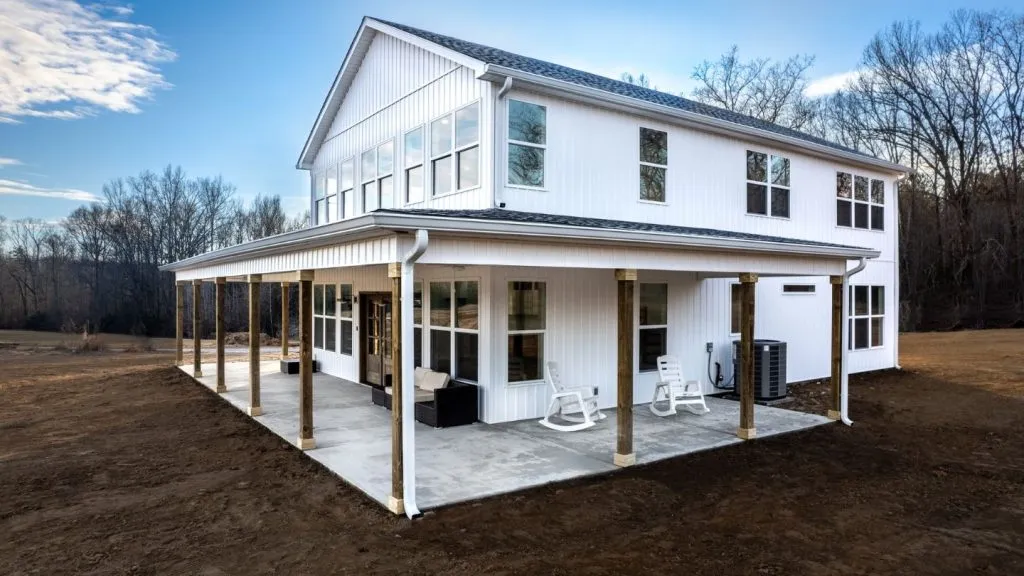
Building a custom home is one of the most personal investments you’ll ever make. When that home sits in a cold climate, where winter months stretch long, and temperatures plunge well below freezing, every design decision carries extra weight. The walls, the windows, the roof, the heating systems: they all need to work together in such a way that your home stays warm, efficient, and comfortable no matter what the weather throws at it.
At its core, designing for cold climates is about controlling three things: heat, air, and moisture. Get these right, and you’ll have a house that feels cozy in January, keeps energy bills manageable, and stands up to decades of freeze-thaw cycles without structural damage. Get them wrong, and you’re looking at drafts, ice dams, condensation problems, and a furnace that never seems to stop running. Let’s walk through what it takes to design a custom home that thrives in the cold, from site selection all the way to choosing the right builder.
Key Takeaways
- Cold climate design must be planned from the first sketch: lot choice, orientation, insulation, and heating are all linked and should be decided together.
- High-performance insulation, airtight construction, and upgraded windows are essential for comfort and efficiency in colder parts of the Southeast—especially in higher-elevation areas of East Tennessee. Homes built with strong envelope performance help reduce drafts, improve indoor comfort, and keep heating costs predictable during winter cold snaps.
- Combining efficient mechanical systems (zoned heating, HRV/ERV, radiant floors) with passive heating strategies (solar orientation, thermal mass, shading) delivers both comfort and lower energy costs.
- Durable exterior materials and smart roof and snow management, snow-shedding roofs, heated entries, and protected foundations are essential to prevent winter damage.
- Work with local, cold-climate-experienced builders and designers who understand regional challenges like permafrost, high snow loads, and winter air quality.
Understanding Your Cold Climate and Building Site
Before any design decisions are made, evaluating your cold climate and specific building site is essential to creating a home that performs well year-round. Temperature extremes, snowfall patterns, prevailing winds, sun angles, and soil freeze depth all influence how the home should be oriented, insulated, and structured. Site-specific factors, such as slope, tree cover, and exposure, also affect heat loss, snow drifting, and drainage. Understanding these conditions early allows the design to work with the environment, improving comfort, durability, and long-term energy efficiency while reducing costly adjustments later. Early site and climate analysis reinforces understanding of the role of a home construction company in custom home design, where environmental conditions directly shape structural decisions and long-term performance.
Key site-analysis priorities:
- Local temperature extremes and freeze-thaw cycles directly influence foundation design (frost depth requirements), roof structure (snow load engineering), and material choices (freeze-thaw resistant siding and roofing).
- Microclimate matters enormously: a south-facing slope receives more winter sun and can boost passive heating, while a site exposed to prevailing north winds will lose more heat and accumulate more drifting snow.
- Soil and ground conditions, including clay-heavy soils, high water tables, and sloped lots common in parts of Southeast Tennessee, can affect foundation type, whether a basement is practical, how much insulation goes beneath slabs, and what drainage strategies are needed for long-term stability.
- A well-drained, south-facing home site in Southeast Tennessee, for example, can reduce moisture issues, improve natural light, and support better year-round comfort—especially on lots with slopes or heavier clay soil. This kind of placement helps manage drainage after heavy rain while making sunlight a practical design advantage instead of a challenge.
- Early evaluation of shading from nearby buildings or tall trees helps you plan window placement for both natural light and passive solar gain.
High-Performance Building Envelope: Insulation, Air Sealing, and Windows
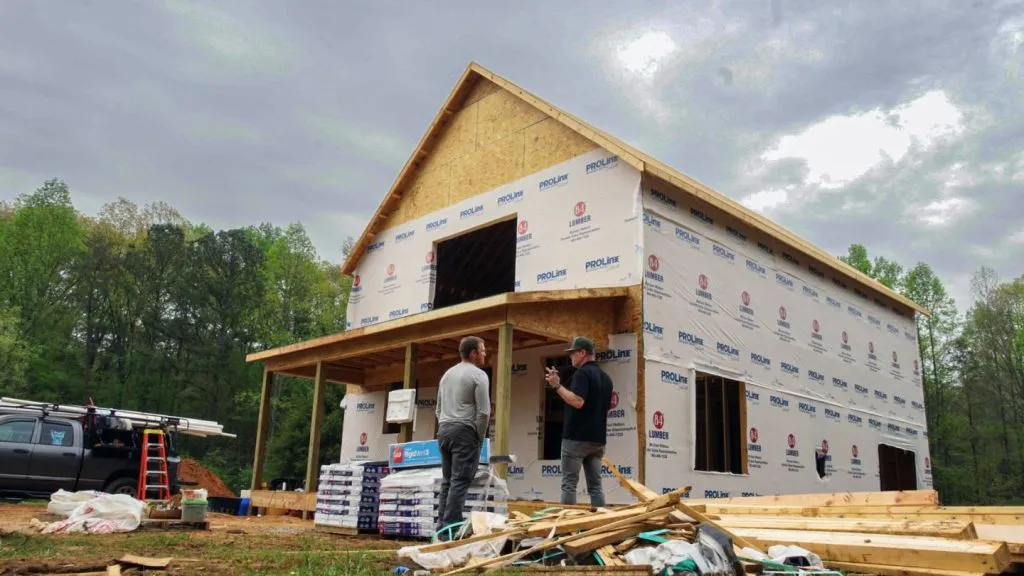
Your building envelope, the foundation, exterior walls, roof, doors, and windows, is the primary defense against cold and energy loss. Think of it as a continuous thermal blanket wrapped around your living space. Any gap, any thermal bridge, any under-insulated section becomes a weak point where heat escapes and cold creeps in.
In cold climates, the goal isn’t just to meet code minimums. It’s to build a well-insulated home that keeps interior surfaces warm enough to prevent condensation, eliminates drafts, and dramatically reduces the workload on your heating systems.
Insulation strategies and materials:
- Continuous exterior insulation (rigid foam boards applied over structural sheathing) is one of the most effective ways to reduce heat loss by eliminating thermal bridges through studs and framing. This approach wraps the entire building in a consistent thermal layer.
- Target R-values that meet or exceed IECC recommendations for Zones 5–7: roughly R-10 to R-20 under slabs, R-30 or higher for walls, and R-49 or more for roofs and attic spaces. Higher is often better; every additional R-value reduces long-term heating demand.
- Common insulation materials include spray foam (excellent air sealing and high R-value per inch, but must be detailed carefully for moisture), dense-pack cellulose (cost-effective, fills cavities well), mineral wool (fire-resistant, moisture-tolerant), and rigid foam like XPS insulation or EPS boards. Wood-fiber boards are gaining popularity for their vapor-open properties and sustainability.
- Airtight construction is just as important as insulation. A continuous air barrier, taped sheathing, carefully sealed penetrations, and attention to transitions between walls, roof, and foundation, prevent warm air from leaking out and cold air from infiltrating. High-performance home targets often aim for 2 ACH50 or less on blower-door tests, meaning the entire air volume of the house exchanges no more than twice per hour under pressure.
- Triple pane windows with low-e coatings, argon or krypton gas fills, warm-edge spacers, and insulated frames are strongly recommended. They keep interior glass surfaces warmer (reducing condensation and cold drafts), improve comfort near large windows, and cut heat loss significantly compared to double-pane units.
- Window and front door installation details matter: proper flashing, sill pans, and meticulous air sealing around frames prevent ice buildup, drafts, and moisture intrusion. Insulated exterior doors with quality weatherstripping and thermal breaks complete the envelope.
Heating Systems and Mechanical Design
Even with a superinsulated envelope, your home needs a reliable, efficient way to generate warmth during the coldest months. The good news: a high-performance envelope means your heating systems can be smaller, run less often, and cost less to operate than in a typical code-built house. Mechanical choices can reflect lifestyle priorities, demonstrating how to personalize your custom home design by tailoring comfort systems, zoning, and controls to match how each space is actually used throughout the year.
The key is right-sizing. A Manual J heat-loss calculation, performed by your mechanical designer or HVAC contractor, determines exactly how much heating capacity you need based on your specific envelope, climate, and floor plan. Oversized equipment short-cycles, wastes energy, and often delivers uneven comfort.
Heating options and strategies:
- High-efficiency gas or propane furnaces and boilers remain popular in cold regions, especially where natural gas is available. Look for condensing units with AFUE ratings of 90% or higher; some reach 98%.
- Cold-climate air-source heat pumps have improved dramatically and can now maintain substantial heating capacity down to -15°F or colder. In well-insulated homes, they can serve as primary heat with backup resistance elements for the coldest days.
- Ground-source (geothermal) heat pumps tap stable ground temperatures for exceptional efficiency (COP ratings of 3 to 4), though they require significant upfront investment for ground loops.
- Radiant heating, hydronic tubing, or electric mats in floors deliver even warmth from the ground up. It’s especially valued in basements, bathrooms, and living areas with concrete or tile floors. Radiant systems pair well with thermal mass elements and eliminate the drafts common with forced-air systems.
- Zoned heating and smart thermostats allow different areas (sleeping wing, main living spaces, basement) to maintain different temperatures. Lower the temperature in unoccupied zones or overnight, and you’ll reduce energy use without sacrificing comfort where it matters.
- Backup heat sources provide resilience during power outages or extreme cold snaps. High-efficiency wood stoves, pellet stoves, or direct-vent gas fireplaces can keep your home safe and livable when the grid goes down.
- For compact, efficient homes, consider integrating domestic hot water with your heating system through a combi-boiler or indirect water heater, simplifying the mechanical room and reducing equipment.
Passive Solar Design, Orientation, and Daylighting
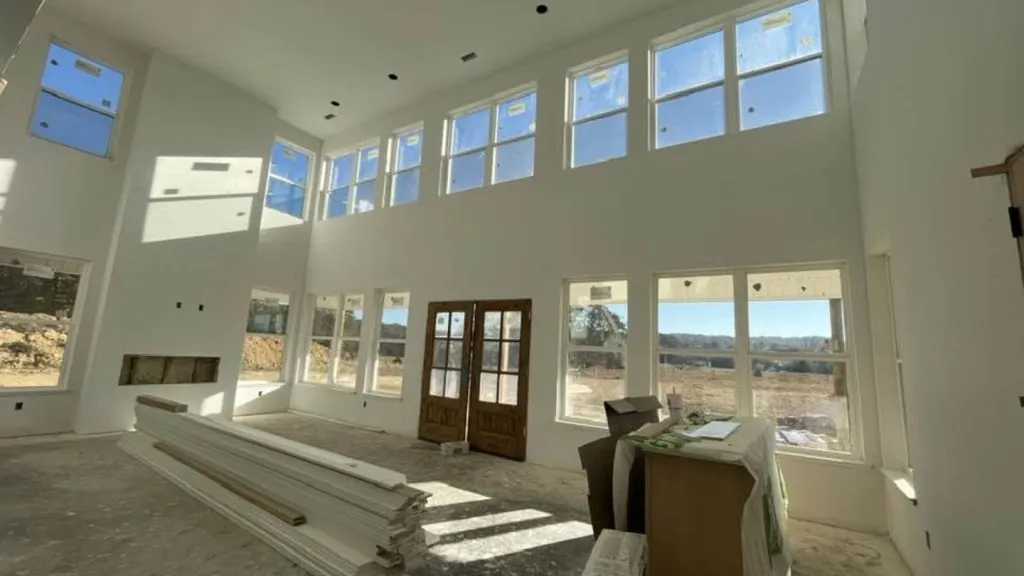
Passive heating lets the sun do part of the work, reducing your reliance on mechanical systems and creating spaces filled with natural light during the darkest months. It’s one of the most cost-effective strategies available, but it has to be planned from the very beginning of the design process. Orienting the home for solar gain reflects how custom home builders help design the perfect floor plan, ensuring daylight, energy efficiency, and comfort are integrated from the earliest planning stages.
The principle is simple: orient your building to capture low-angle winter sun through south-facing windows, store that warmth in thermal mass elements, and use shading to prevent overheating in summer. Done well, passive solar can cut heating loads by 20–40% in cold climates.
Passive design strategies:
- In the northern hemisphere, orient your home with the long axis running east–west. This maximizes south-facing wall area for solar gain while minimizing exposure to cold north winds.
- Place large windows on the south side, especially in main living spaces like the kitchen, living room, and dining area. These are the rooms where you’ll spend daytime hours and benefit most from direct sunlight.
- Limit glazing on the north side of the home to reduce heat loss. North-facing windows rarely provide useful solar gain but always lose heat. Use smaller, code-minimum windows here.
- Moderate east and west glazing to control morning and afternoon glare while still providing cross-light and views.
- Incorporate thermal mass, polished concrete floors, interior masonry walls, or tile in sun-struck areas to absorb daytime heat and release it slowly after sunset. In East Tennessee, a darker concrete slab in a sunlit living room can help reduce temperature swings during winter cold snaps while improving overall comfort and efficiency.
- Size roof overhangs to block high summer sun while admitting low winter sun. In many cold regions, summers are warming, making shading increasingly important even where overheating wasn’t historically a concern.
- Maximize daylighting for mood and well-being during dark winter days. Clerestory windows, light shelves, and interior glass partitions can distribute light deeper into the floor plan, reducing the need for artificial lighting and combating winter cabin fever.
Read More: Common Floor Plan Mistakes to Avoid
Ventilation, Air Quality, and Moisture Management
Here’s the tradeoff with tight, super-insulated homes: without controlled ventilation, you’ll trap stale air, excess humidity, cooking odors, and pollutants inside. When windows stay closed from November through April, you need a mechanical system to continuously bring in fresh air and exhaust moisture.
Proper ventilation protects both your family’s health and your building’s durability. Excess indoor humidity in winter can condense on cold surfaces, windows, corners of exterior walls, and rim joists, leading to mold growth, rotting sheathing, and long-term structural damage.
Ventilation and air quality essentials:
- Heat recovery ventilators (HRVs) and energy recovery ventilators (ERVs) are a smart upgrade for energy-efficient homes, especially in climates with both cool winters and humid summers like Tennessee. Both systems exchange stale indoor air for fresh air while recovering a significant portion of the heating or cooling energy that would otherwise be lost. HRVs primarily transfer heat, while ERVs transfer heat and help manage moisture, which can be valuable in East Tennessee homes where indoor humidity control matters for comfort and long-term durability. Choosing the right system depends on your home’s airtightness, insulation levels, and how you want to balance fresh air with humidity management year-round.
- A balanced mechanical ventilation system continuously exhausts stale, humid air from kitchens, bathrooms, and laundry rooms while supplying filtered fresh air to living spaces and bedrooms. This maintains healthy air quality without opening windows in subzero weather.
- Target indoor relative humidity of roughly 30–40% in winter. Higher humidity increases condensation risk on windows and cold surfaces; lower humidity can cause discomfort and static electricity.
- In basements, crawl spaces, and mechanical rooms, dehumidification may be necessary, especially during increasingly humid summers in northern states. Whole-house or stand-alone dehumidifiers help keep moisture in check year-round.
- Install quiet, efficient bath fans with timers for quick moisture removal after showers. Kitchen range hoods should vent outside (not recirculate). If you have combustion appliances, provide dedicated fresh air intakes as required by code for safety.
- Homeowner education matters: filters must be changed regularly, HRV/ERV controls require a basic understanding, and neglecting ventilation can undo the benefits of a high-performance home envelope.
Exterior Materials, Roofing, and Snow Management
Your home’s exterior shell takes the brunt of cold-climate weather: years of snow, ice, wind-driven rain, and relentless freeze-thaw cycles. Choosing durable materials and designing for snow management from the start will save you from costly repairs and constant maintenance.
Siding and cladding choices:
- Fiber-cement boards offer excellent durability, low maintenance, and resistance to moisture, rot, and temperature fluctuations.
- Brick veneer handles freeze-thaw cycles well and adds thermal mass.
- Engineered wood siding provides a natural look with improved moisture resistance compared to traditional wood.
- Steel panels are increasingly popular in mountain regions, durable, fire-resistant, and visually striking.
- Regardless of material, install a robust water-resistive barrier and consider a ventilated rainscreen assembly to promote drainage and drying behind the cladding.
Roofing and snow load considerations:
- Standing-seam metal roof systems shed snow efficiently and last for decades. They’re ideal for steep pitches but require snow guards above doors and walkways to prevent dangerous snow slides.
- High-quality asphalt shingles remain a budget-friendly option for many custom homes, though they don’t shed snow as readily and require careful attention to ice dam prevention.
- Slate and composite tiles suit luxury builds where aesthetics and longevity justify a higher cost.
- Roof pitch matters: steeper slopes (6:12 or greater, at least 10 degrees) help shed snow naturally. Truss and rafter sizes must be engineered to meet local snow-load codes.
Preventing ice dams:
- Ice dams form when warm air from the house heats the roof deck, melting snow that refreezes at colder eaves. Water backs up, seeps under shingles, and leaks inside.
- Prevention requires continuous insulation at the roof plane, thorough air sealing at the attic ceiling to stop warm air leakage, and proper ventilation (soffit-to-ridge) to keep the roof deck uniformly cool.
- Ice shield membranes along eaves provide a backup waterproofing layer.
Read More: The Essential Guide to Home Building Materials and Features
Planning for Resilience, Utilities, and Lifestyle in Winter
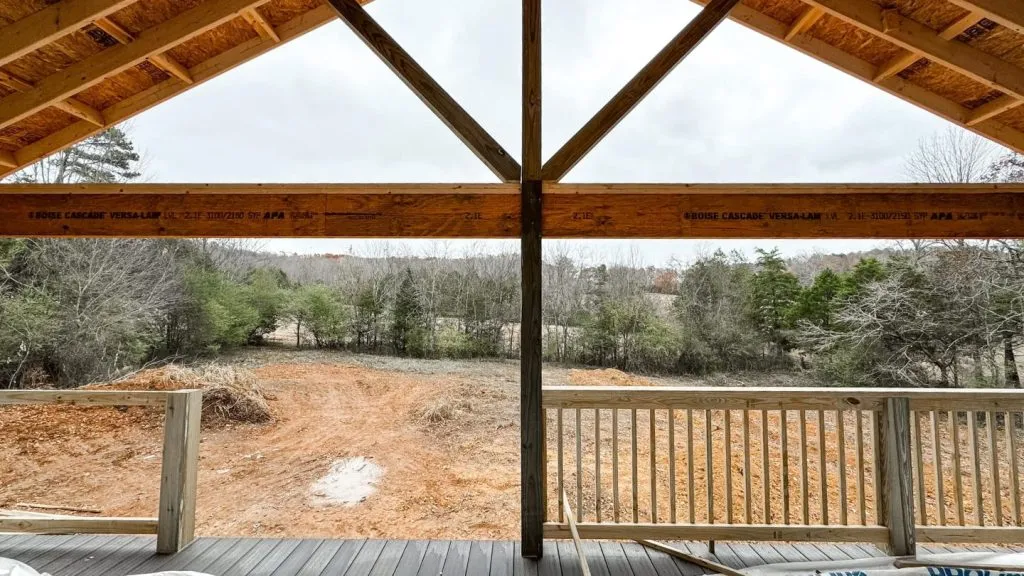
A cold-climate custom home should be designed not just for energy efficiency, but for real life through long, dark winters, including storms, power outages, and months of limited outdoor activity.
Backup power and utility planning:
- Consider a whole-house generator or battery storage paired with solar PV to keep heat, well pumps, refrigeration, and key circuits running during outages.
- In rural areas where propane or heating oil is delivered, locate fuel tanks where they’re accessible for fill-ups but protected from being buried by plowed snow.
- Homes with well water may benefit from storage tanks to buffer supply during pump outages.
Everyday winter-living features:
- A generously sized mudroom with built-in benches, coat hooks, boot storage, and durable flooring at entries makes coming and going easier and keeps snow and slush out of living spaces.
- Interior access from the garage minimizes exposure to cold weather during daily routines.
- Dedicated drying space, for wet ski gear, snowshoes, or children’s snow pants, prevents moisture from accumulating indoors.
Indoor comfort and wellness:
- Plan for home offices or flexible spaces where you can work comfortably when winter travel is difficult.
- Include exercise or hobby rooms to stay active during months of limited outdoor recreation.
- Maximize natural light and views to combat cabin fever; this circles back to thoughtful window placement and daylighting strategies.
Construction logistics:
- Building in cold climates often means working through winter months. Plan for the protection of materials from snow and ice, and sequence work to avoid moisture problems in partially enclosed structures.
- Discuss winter construction strategies with your builder early; experienced cold-climate teams know how to manage these challenges.
Read More: How to Choose the Right Home Builder for Your Custom Home
Building for Comfort in Every Season
Designing a custom home for a cold climate requires early planning, thoughtful material choices, and systems that work together to protect comfort and efficiency. When insulation, windows, orientation, and ventilation are designed as a unified strategy, the home performs better, costs less to operate, and remains durable through years of harsh winter conditions.
Concord Homes is a trusted home builder in Ocoee, TN, that focuses on smart planning and proven building practices. Whether planning anindividual custom home or exploring available properties, cold-climate design decisions benefit from experienced guidance. We invite you to work with us to create a home that stays comfortable, efficient, and resilient no matter the season.
Frequently Asked Questions
How early in the design process should I start thinking about cold-climate features?
Cold-climate features should be considered from the very beginning of the design. Orientation, insulation strategy, and heating approach affect floor plans, window placement, roof design, and mechanical sizing. Addressing these elements early ensures better performance, lower costs, and avoids inefficient retrofits later in the build.
Is it worth paying extra for triple-pane windows if my code only requires double-pane?
In regions with long, cold winters, triple-pane windows are typically worth the added cost. They reduce heat loss, limit condensation, improve comfort near glass surfaces, and decrease drafts. Over time, lower heating costs and improved indoor comfort often offset the initial investment.
Can I still have large windows and high ceilings in a very cold climate?
Yes, large windows and high ceilings can work well in cold climates when designed carefully. High-performance glazing, south-facing orientation, added insulation, and thermal mass help offset heat loss. Proper design prevents drafts and ensures the space remains comfortable during extreme cold.
Do I need both an HRV/ERV and bathroom fans?
Many high-performance homes use an HRV or ERV for whole-house ventilation, but bathroom fans are often still included. Dedicated fans or boost modes help quickly remove moisture after showers. Local codes and ventilation design recommendations determine the best combination for each home.
How much more does a cold-climate-optimized home cost up front?
Cold-climate-optimized homes typically cost 5–15% more than code-minimum builds due to upgraded insulation, windows, and mechanical systems. These investments reduce energy bills, improve comfort, and enhance durability. Many homeowners experience a relatively short payback as energy costs rise.