
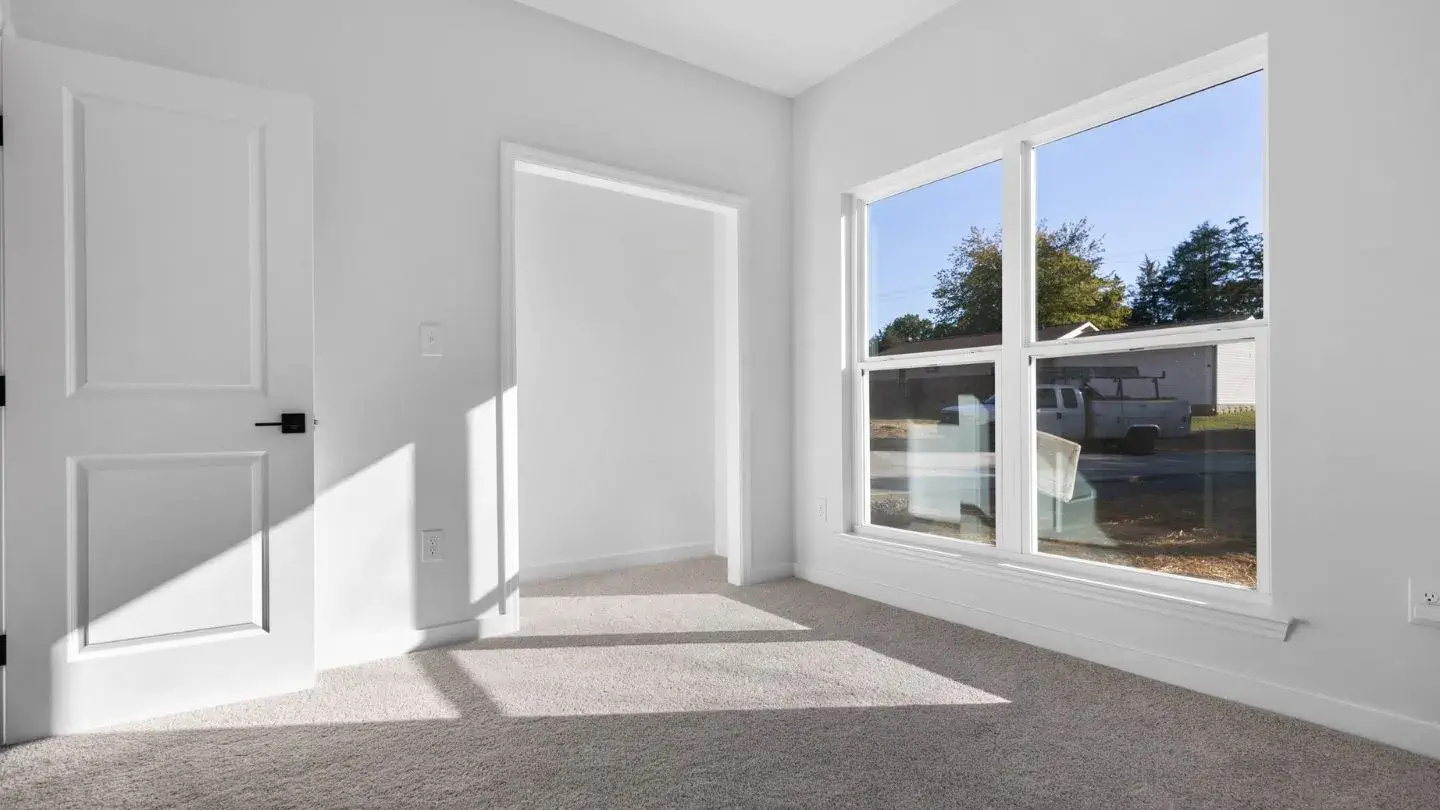
 Designing a home goes far beyond aesthetics; it directly affects comfort, privacy, and how well the space supports daily life. Bedroom placement plays a major role in creating quiet, personal retreats within an active household. Thoughtful planning helps prevent noise issues, awkward layouts, and future regrets. Selecting the best layout and paying attention to every bit of the design can optimize privacy and comfort from the start. When privacy is considered early, the entire home feels more intentional and livable. In this blog, we’ll explore smart bedroom layout strategies, common privacy mistakes to avoid, and how intentional planning during new home construction creates comfortable, well-separated spaces for every stage of family life.
Key Takeaways
- Bedroom privacy starts at the whole-house floorplan level—which floor, which wing, and how close bedrooms sit to shared spaces matters more than where you place the bed inside the room.
- Families with babies and toddlers often want bedrooms clustered together for easy monitoring, while families with teens, frequent guests, or work-from-home needs benefit from split-bedroom layouts that put distance between sleeping zones.
- Locating your main bedroom away from high-traffic zones like kitchens, mudrooms, and the family room significantly reduces both noise and visual exposure.
- Walls, doors, closets, bathrooms, and even laundry placement can serve as “buffers” to improve acoustic and visual privacy between rooms—often without adding square footage.
- Think ahead: plan for aging in place, future resale value, and flexible use of bedrooms as offices or guest rooms.
- Using floor plan software can help you visualize and achieve the best layout for privacy and functionality.
Why Bedroom Privacy Should Shape Your New Home Floorplan
When we talk about privacy in a new build, we’re really talking about three things: sound control, sightlines, and personal space. Sound control means not hearing the TV through the wall when you’re trying to sleep. Using solid-core doors instead of hollow-core doors provides a much better sound barrier, further enhancing bedroom privacy. Sightlines are about whether guests at your front door can see directly into your bedroom. Strategic window placement, such as installing high windows, can help maintain privacy in urban areas where neighboring homes are close. And personal space? That’s the feeling that your bedroom is truly yours—a retreat where you can close the door and leave the rest of the house behind.
Nowadays, more families are working from home at least part-time, which means bedrooms often double as offices. Multi-generational households are increasingly common, with adult children or aging parents sharing the home. And with lots getting smaller in many suburban markets, your neighbors’ windows might be closer than you’d like. All of this makes thoughtful bedroom layout planning essential from day one. Understanding how custom home builders help design the perfect floor plan ensures privacy, sound control, and personal space are intentionally built into the layout from the very beginning.
Choosing the Right Floor for Each Bedroom
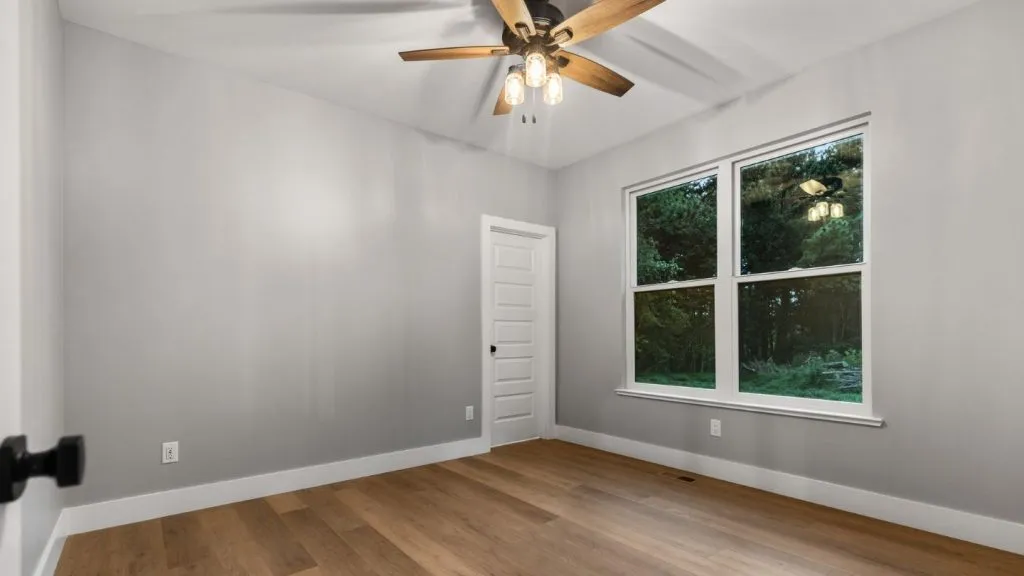
Which floor a bedroom sits on often matters more for privacy than its exact dimensions. A generous 14×16 bedroom loses its appeal if it’s positioned where every conversation from the main floor floats up the stairs.
Bedroom placement plays a major role in creating quiet, personal retreats within an active household. Layouts can be designed to accommodate younger siblings, ensuring privacy and convenience for families with children by separating sleeping areas or grouping bedrooms with shared bathrooms.
For reference, the average US bedroom is about 132 sq. ft. (11’x12′), which can help guide your planning.
Primary Bedroom: Main Level vs. Upstairs
For young families, placing the master bedroom upstairs alongside kids’ rooms makes nighttime parenting easier. You’re steps away when a toddler calls out, or a baby needs feeding. But this clustered approach means less separation between adult and children’s sleeping spaces—and as those kids grow into teens with different schedules, that closeness can become a liability.
Empty nesters and couples planning for the long term often prefer a main-floor master suite. This keeps daily life on one level, reduces stair climbing, and creates natural separation from upstairs guest rooms or a future home office. For multigenerational households, a ground-floor primary bedroom can also make it easier to accommodate aging parents who need their own private space without navigating stairs.
Upstairs Zones for Kids and Teens
Placing secondary bedrooms upstairs creates a natural privacy layer. Kids and teens have their own zone, separated from the main living area and any late-night adult activities downstairs. This arrangement can also benefit younger siblings by giving them a dedicated, private space away from the main activity areas.
This works especially well when the stair location is thoughtfully placed—ideally not opening directly into the upstairs hallway where every footstep echoes down to the first floor.
For families with teens, consider how stair placement affects late-night comings and goings. A staircase that deposits teens right next to the master bedroom door defeats the purpose of floor separation. Instead, look for floor plans where upstairs bedrooms are accessed via a short hallway that buffers sound and movement.
Walk-Out Basements: Private Suite or Too Isolated?
A lower-level bedroom in a walk-out basement can be a wonderfully quiet, private suite—perfect for a guest room, a work-from-home office that doubles as sleeping space, or an adult child’s bedroom. The earth-sheltered walls naturally dampen sound, and the separation from main-floor activity creates a genuine retreat.
However, basement bedrooms aren’t ideal for young children. The distance can feel isolating, and supervision becomes more challenging. Safety considerations—egress windows, smoke detectors, and the ability to hear a child call out—should guide your decision. For teens or adults, though, a finished lower level can offer exactly the privacy and independence they crave.
Concrete Layout Examples
Consider a 2-story, 2,400 sq ft home designed for a family with three school-age kids. The main floor holds the primary suite on one side, separated from the open-concept kitchen and living area by a short hallway and a linen closet. Upstairs, three kids’ bedrooms share a Jack-and-Jill bathroom, with the staircase positioned so parents can hear activity without being in the direct path of foot traffic.
Or picture a 1-story, 2,000 sq ft split-bedroom ranch for a couple in their 50s. The master suite occupies one end of the house, with a spacious walk-in closet and en suite bathroom creating buffers from the central living area. On the other end, two secondary bedrooms share a hallway bathroom—perfect for guests or visiting grandchildren, with enough space between that neither party disturbs the other.
Read More: How to Choose the Best Flooring for Your Custom Home
Split-Bedroom vs. Clustered Layouts: Matching Privacy to Family Stage
The terms “split-bedroom” and “clustered” describe fundamentally different approaches to bedroom placement. In a split-bedroom plan, the primary suite sits on one side or end of the house (or on a different floor), while secondary bedrooms occupy the opposite side or another floor. In a clustered plan, all bedrooms line up along one corridor or wing.
Neither approach is universally better. The right choice depends on your family’s current stage—and where you expect to be in five or ten years. Recognizing the essential things to know when choosing the right floor plan helps families align bedroom separation with lifestyle needs, long-term flexibility, and future household changes.
When Clustered Layouts Work Best
If you’re building a home for life with a newborn, a toddler, or kids under about 8–10 years old, a clustered bedroom layout often makes the most sense. You want to be close enough to hear a baby monitor clearly, to respond quickly when a child has a nightmare, and to maintain that sense of family connection that young children need.
Clustered layouts also work well in smaller homes under about 1,600 sq ft, where physical separation simply isn’t feasible. In compact floor plans, trying to split bedrooms to opposite ends of the house can create awkward circulation and waste precious square footage on hallways.
When Split-Bedroom Designs Shine
Split-bedroom layouts come into their own when privacy becomes a higher priority than proximity. Families with teens benefit enormously from this separation—different sleep schedules, different entertainment preferences, and the natural desire for autonomy all argue for putting more space between parent and teen bedrooms.
This layout also works beautifully for:
- Blended families where step-siblings benefit from defined personal territories, and split-bedroom layouts can also provide privacy and convenience for younger siblings
- Households with frequent overnight guests who deserve their own private zone
- Work-from-home situations where one bedroom becomes a home office, needing quiet separation from family activity
- Multigenerational living, where an aging parent or adult child needs independence
Buffers Within Clustered Layouts
Privacy isn’t only about distance. Even in a clustered layout, you can create effective buffer zones. Placing a shared bathroom between two kids’ bedrooms adds acoustic separation. A walk-in closet on a shared wall absorbs sound. A short jog in the hallway—even just three or four feet—prevents direct sightlines from one bedroom door to another. The strategic placement of a dresser can also serve as both a functional and aesthetic buffer between sleeping zones, enhancing privacy while improving room organization and flow.
The goal is layered privacy: multiple small barriers that add up to meaningful separation, even when bedrooms are technically close together.
Locating Bedrooms in Relation to High-Traffic and Noisy Spaces
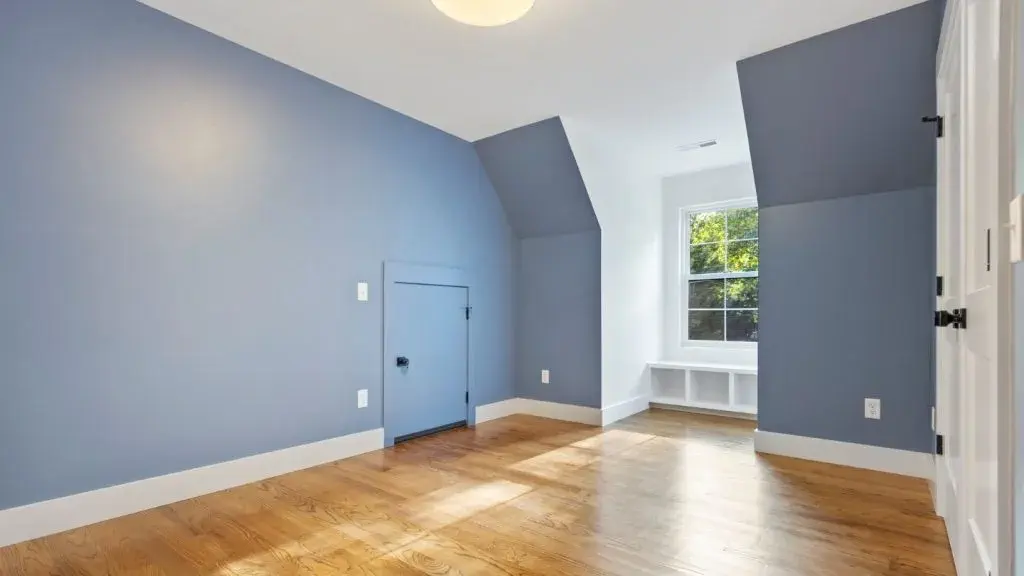
Your bedroom’s neighbors within the house matter just as much as your neighbors next door. Kitchens, mudrooms, garages, staircases, and the family room all generate noise and traffic that can undermine your privacy if bedrooms are positioned carelessly.
What Not to Put Next to a Bedroom
Some adjacencies are simply bad ideas:
| Space | Why It’s Problematic |
| Main living room TV wall | Sound travels directly through shared walls. |
| Laundry room | Washers and dryers create vibration and noise, especially older or unbalanced machines. |
| Busy staircases | Footsteps echo, and every trip up or down passes by the bedroom. |
| Kitchen | Impact noise from dishes, refrigerator hum, vent hoods, and early-morning coffee prep |
| Garage | Engine starts, door openers, and potential fumes (though code requires fire separation) |
When reviewing floor plans with your architect, look critically at what’s on the other side of each bedroom wall. That beautiful corner lot might mean your master suite shares a wall with the garage—fine if you add extra insulation and solid-core doors, problematic if you don’t plan for it.
Read More: 7 Essential Things You Need to Know When Choosing the Right Floor Plan
Garage Adjacency: When It’s Acceptable
Sometimes, lot constraints or optimal floor plans mean a bedroom ends up above or beside the garage. This isn’t automatically a deal-breaker, but it requires intentional planning.
Request from your builder:
- Extra insulation in the shared wall or floor/ceiling assembly
- Solid-core doors on any access points
- Weatherstripping and acoustic seals
- Insulated garage doors that reduce noise from opening and closing
A bedroom over a detached or side-entry garage is generally less problematic than one sharing a wall with an attached garage, where cars start just feet from your headboard.
Thoughtful Door Placement
Think about what’s visible when bedroom doors are open. If your master bedroom door opens directly across from the dining area, every dinner guest has a clear view of your unmade bed. If kids’ bedroom doors face the living room, those rooms feel less private even when closed. Placing the bed on the wall opposite the door can help maximize both space and privacy, making it less likely that the bed is immediately visible from public areas.
Good door placement means:
- Angling doors so they don’t align with main sightlines from public spaces
- Using short hall jogs or vestibules to break direct views
- Positioning doors so the bed isn’t the first thing visible when you walk down the hallway
These are small details on a floor plan, but they make a significant difference in how private your bedrooms actually feel day-to-day. It’s generally not a good idea to place a full- or queen-sized bed in a corner, as this can compromise both flow and privacy.
Using Bathrooms, Closets, and Hallways as Privacy Buffers
One of the smartest ways to improve bedroom privacy is to leverage spaces you already have. Bathrooms, closets, and hallways can all serve double duty as acoustic and visual barriers—often without adding any square footage to your home.
The Concept of Layered Privacy
Think of privacy as layers of separation rather than a single thick wall. Each layer—a closet door, a short hallway turn, a bathroom with solid-core doors—adds to the overall sense of retreat. Stack enough layers, and even bedrooms that are technically close together can feel genuinely private.
Walk-In Closets and Linen Closets as Sound Barriers
Clothing and linens absorb sound remarkably well. A walk-in closet on the wall shared with a noisy space (like the family room or another bedroom) creates a natural buffer that no amount of standard drywall can match. Additionally, placing a dresser along a shared wall can further enhance privacy by serving as an extra sound barrier and providing valuable storage in the bedroom.
When working with your architect, consider:
- Placing walk-in closets between the master bedroom and living areas
- Using linen closets or deep built-ins on walls shared with kids’ rooms
- Positioning the closet door so you pass through a “dressing area” before reaching the sleeping zone
This creates that hotel-like sense of transition—from public to semi-private to fully private space—even in a modest-sized home.
Hallway Design for Privacy
A straight hallway from the living area to the bedroom doors exposes every room to every passerby. Instead, look for floor plans with:
- 90-degree turns that break direct sightlines
- Short hall segments with visual interest (artwork, a window)
- Alcoves for bedroom doors, so they’re slightly recessed; incorporating a small sitting area or table in these alcoves can enhance both privacy and functionality by providing a cozy spot to relax or a versatile workspace.
Even a small jog in the hallway—just three or four feet—prevents guests in your dining area from seeing straight into the master suite.
Strategic Placement of Plumbing and Duct Chases
Don’t overlook the functional walls in your home. Ask your builder to:
- Position plumbing walls (which are thicker due to pipes) between bedrooms and living spaces
- Run duct chases through buffer zones rather than bedroom walls
- Use storage or mechanical closets as additional sound barriers
These elements exist in every home. Placing them thoughtfully costs nothing extra but significantly improves privacy.
Planning for Future Flexibility and Resale Value
Designing for Change
Children grow up and move out. Parents may move in. Work-from-home arrangements shift. A well-designed bedroom layout anticipates these transitions:
- Design at least one bedroom that can flex between a guest room, home office, or future teen/parent suite while still feeling private from the main living area; include a desk or table to support multiple uses such as work, study, or hobbies
- Position this flex room with its own bathroom access if possible, creating a semi-independent suite
- Consider adding rough-in plumbing or electrical for a kitchenette in a guest suite that could become a caregiver’s apartment someday
The fun part of new construction is imagining all the ways your family will use the space. The smart part is making sure the layout can adapt as those dreams evolve. Designing with adaptability in mind reflects an understanding of how to choose the perfect floor plan for your custom home while preserving privacy, functionality, and resale appeal over time.
Read More: The Impact of Custom Homes on Property Value and Resale Potential: A Smart Investment Choice
Aging-in-Place Considerations
Even if you’re building in your 30s or 40s, consider:
- Locating at least one bedroom with a full bathroom on the main level
- Minimizing steps at entries to that bedroom zone
- Ensuring hallways are wide enough for mobility aids
- Providing a quiet, private option for a mobility-limited occupant
A main floor master suite with a walk-in shower and wide doorways costs a little extra during construction but avoids major renovations decades later.
Resale Appeal
Buyers in the late 2020s consistently look for:
- A private primary suite separated from secondary bedrooms
- A dedicated home office or flex space
- Quiet, well-positioned bedrooms away from noisy common areas
- Main-level living options for aging in place
A bedroom’s style and thoughtful furniture arrangement can also make the space more appealing to potential buyers, helping them visualize how the room can reflect their personal taste and function well for their needs.
Thoughtful bedroom privacy can become a genuine selling point. Imagine the MLS description: “Split-bedroom plan with sound-insulated walls, solid-core doors throughout, and primary suite tucked away from family activity.” That’s not just a house—it’s a home designed for real life.
Document Your Privacy Features
Keep a simple record—print or digital—of your bedroom layout decisions, sound-insulation specifications, and electrical/plumbing locations. Future owners will appreciate understanding why the walls between bedrooms are thicker than standard, or why the master suite feels so peaceful.
This documentation positions your home as thoughtfully crafted, not just quickly built.
Designing Privacy That Lasts

Thoughtful bedroom layout planning is essential to creating a home that feels comfortable at every life stage. By balancing proximity, sound control, and separation from shared spaces, homeowners can protect privacy without sacrificing flow or function. Smart planning during design prevents costly changes later and supports long-term livability.
At Concord Homes, we provide new home construction in Ocoee, TN, for families considering guidance and careful planning. Whether planning an individual custom home or reviewing available properties, thoughtful layout decisions make a lasting difference. We invite you to work with us to create a home that delivers privacy, comfort, and confidence from the start.
For more inspiration, consider exploring design galleries or resources to discover additional bedroom layout ideas that can help personalize and enhance your new home.
Frequently Asked Questions
How far should kids’ bedrooms be from the primary bedroom for good privacy?
In most homes, placing bedrooms on the same floor but separated by a short hallway provides effective privacy. This layout balances sound separation with nighttime accessibility. Using closets or bathrooms as buffers helps reduce noise, while older children often benefit from greater distance or a separate floor.
Is a split-bedroom layout bad for families with very young children?
Fully split-bedroom layouts can feel too far apart for infants or toddlers who need frequent nighttime care. Many families use a nearby nursery or temporary in-room sleeping arrangement early on, then transition children to more distant bedrooms as they grow and need less supervision.
What’s the biggest privacy mistake people make with bedroom layouts?
Common mistakes include bedroom doors opening directly into living spaces, doors aligned with the front entry, or shared walls with noisy areas like laundry rooms. These layout issues compromise privacy and acoustics and are far easier to prevent during planning than to fix later.
Should I prioritize bedroom privacy or open-concept living?
Both can work together when planned intentionally. Open-concept living areas can remain social and bright while bedrooms are placed along quiet corridors or separate zones. Thoughtful layout design ensures privacy without sacrificing flow, comfort, or the connected feel many homeowners want.